









Russia Launches First Brain-Chipped Bird Drones for Surveillance Over Cities
MOSCOW — In a development that blurs the line between biology and military technology, Russian researchers have reportedly conducted the first successful field tests of "biodrones"—ordinary pigeons equipped with brain-controlling implants designed for surveillance missions.

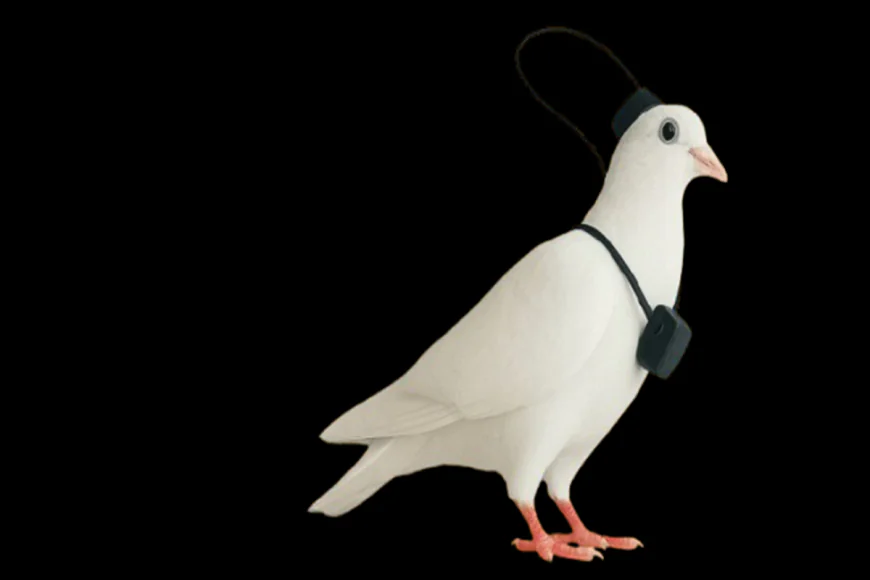
- According to reports surfacing in late November 2025, the Russian neurotechnology company Neiry has successfully tested a flock of these cyborg birds in Moscow.
- The project aims to create a new class of aerial surveillance tools that can navigate urban environments undetected, hiding in plain sight among natural wildlife while transmitting data back to operators.
The "Biodrone" Technology
- The core of this controversial project, reportedly codenamed PJN-1, involves a combination of precise neurosurgery and miniature robotics. Reports from Forbes Russia and other outlets indicate that scientists implant electrodes directly into the birds' brains.
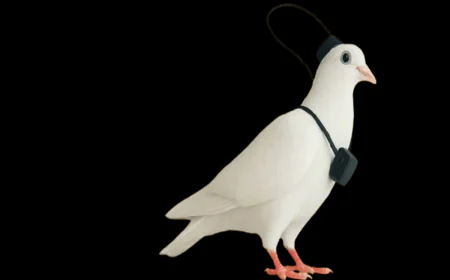
- These electrodes are linked to a lightweight, solar-powered "backpack" mounted on the bird's body, which contains a GPS tracker, a communication unit, and a battery.
- Unlike traditional drone training, which relies on behavioral conditioning, this system utilizes direct neural stimulation. When an operator sends a signal for a left or right turn, the electrodes stimulate the specific brain region responsible for that motor function. Neiry spokespeople have described the effect as manipulating the bird's internal motivation; the pigeon does not feel forced but rather "believes" it wants to fly in the directed direction.
- Neiry claims the system requires no prior training for the birds and asserts that their stereotactic surgical methods ensure a high survival rate for the animals involved.
Surveillance and Strategic Applications
- The primary operational goal of these biodrones is covert surveillance. The birds are reportedly capable of carrying miniature cameras and sensors, with onboard AI processing to handle tasks such as facial blurring to comply with privacy regulations—though military applications would likely bypass such restrictions.
- Proponents of the technology argue that bird drones offer distinct advantages over mechanical UAVs:
- Stealth: A pigeon perched on a power line or flying over a city square arouses no suspicion, unlike a buzzing quadcopter.
- Efficiency: By utilizing the bird's natural flight mechanics, the system consumes significantly less energy than mechanical drones, potentially allowing for longer mission durations.
- Cost: Neiry asserts that the cost of producing a biodrone is comparable to that of conventional drones but with superior range and autonomy.
- The company has stated plans to expand the program beyond pigeons. Future iterations may utilize larger species such as ravens, seagulls, and albatrosses to carry heavier payloads or conduct long-range monitoring missions over coastlines and industrial infrastructure.
Ethical Concerns and Skepticism
- The announcement has triggered a wave of ethical debate and skepticism within the scientific community. Animal welfare advocates have condemned the practice of hijacking a living creature's nervous system for military or industrial use, labeling it cruel and invasive.
- Furthermore, while Neiry has touted the success of its tests, some independent experts and fact-checkers have urged caution. The blending of "viral" scientific claims with actual defense capabilities often leads to exaggeration.
- Some reports suggest that while the neural interface technology is real, the practical deployment of such birds for reliable, large-scale city surveillance remains experimentally unproven and fraught with technical challenges.
- Despite these reservations, the reported tests in Moscow mark a significant and unsettling step forward in the field of bio-robotics, suggesting a future where the eyes in the sky may literally belong to the birds.